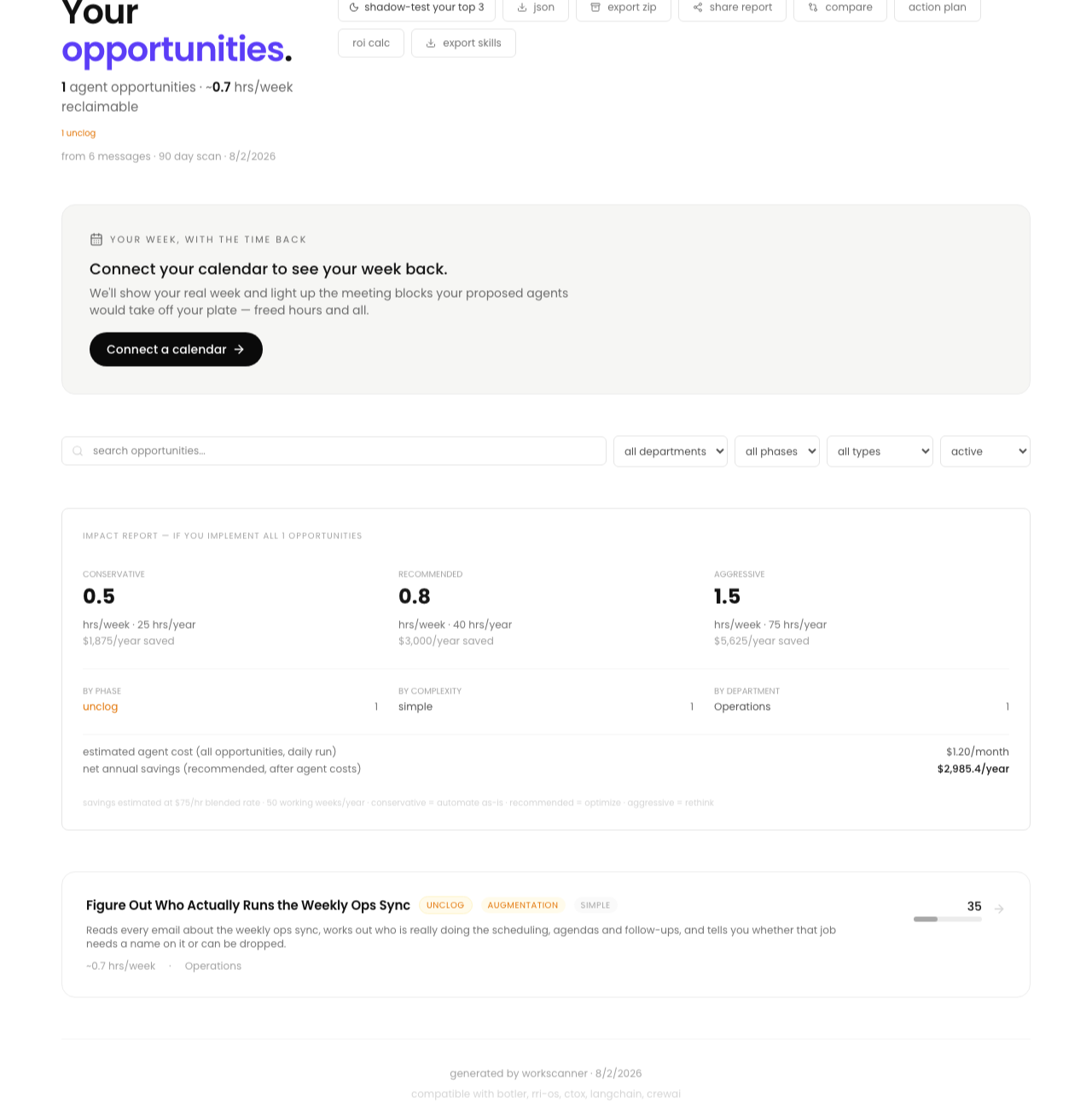
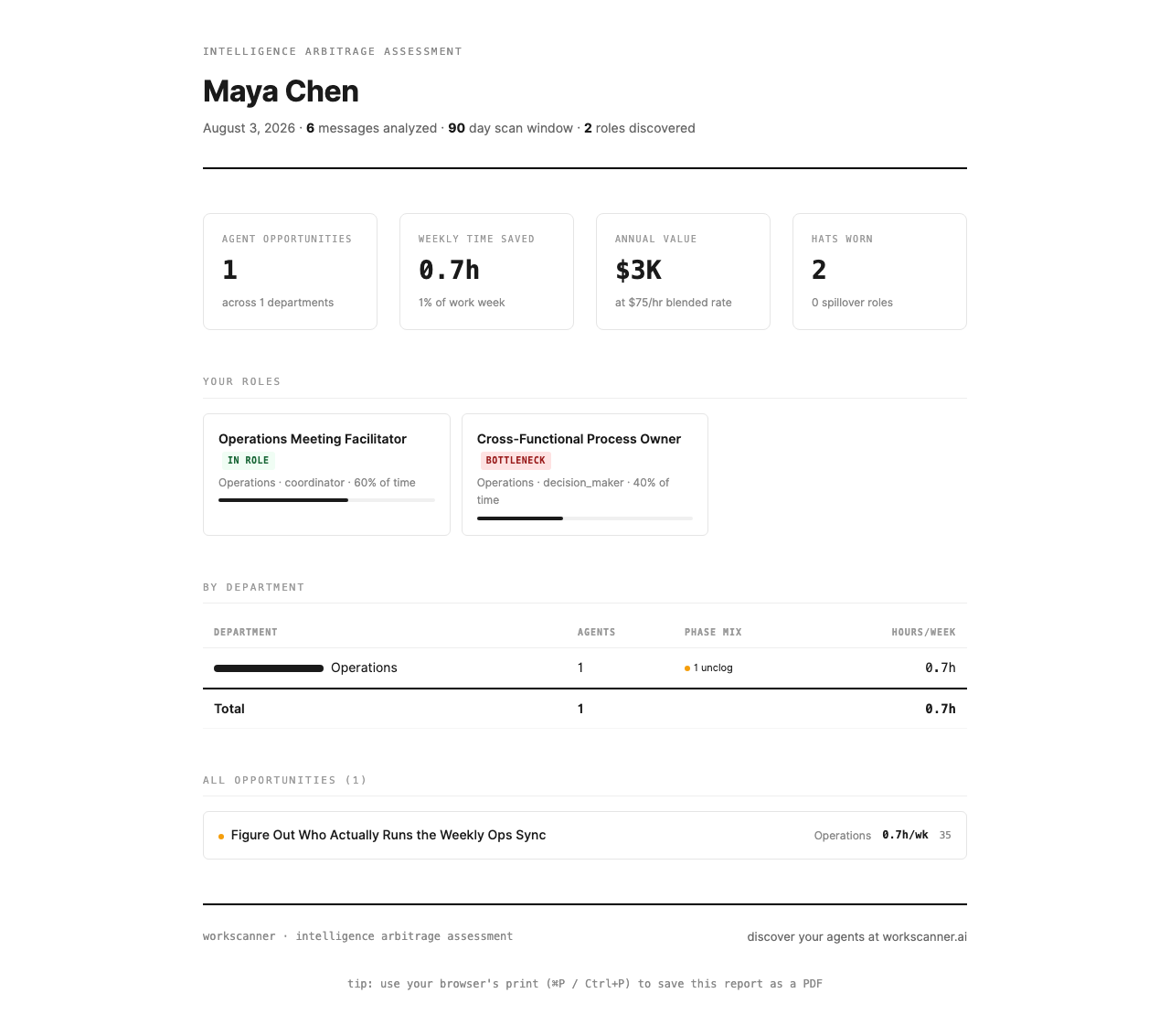
WorkScanner reads your real work — email, Slack, calendar, meeting transcripts — and tells you exactly which AI agents to build, with evidence from your own data.
A 12-step pipeline finds the recurring work you actually do — then writes the spec for the agent that could absorb it.
Gmail, Slack, Outlook, Calendar, iCloud Mail — or just upload meeting transcripts. Zero OAuth setup required to start.
The pipeline classifies, clusters, and analyzes your communication: the roles you play, the promises you make, the work that keeps recurring.
Every opportunity ships with a system prompt, skills, tools, boundaries, a before/after flow — and the evidence from your own data that justified it.
Claude Code skill files, LangChain JSON, CrewAI YAML. Team mode finds duplicate agents, bottlenecks, and silos across people.
Two containers plus services you bring. The database bootstraps itself — schema, migrations, and deny-by-default row-level security in one command.
| You bring | Supabase (cloud free tier or self-hosted) · Clerk (free tier) · an LLM API key |
| We ship | App + worker containers · internal cron · one-command DB bootstrap |
Mac app that brings iMessage, WhatsApp, and Telegram into your scans — including voice-message transcripts. Raw databases never leave your machine; parsed messages go only to your server.
CLI that reads your local Screenpipe database, detects patterns on-device, and syncs only summaries. Frames, audio, and clipboard stay local.
Plain Postgres without the Supabase layer. Pluggable auth. Any LLM provider. Direct Microsoft 365. The first two are marked contributor-friendly.
Most teams guess which AI agents to build. WorkScanner replaces the guess with evidence: your own inbox, your own meetings, your own recurring work — analyzed, quantified, and turned into specs you can ship.